
Harvey Corbin’s Story of Surviving Hurricane Beryl’s Destruction
Harvey Corbin can talk all day about his boat – truly. But he has good reason for that, because after losing his livelihood during Hurricane Beryl and having to rebuild from the disaster, the pride that now shines in his eyes as he details his plans to return to fishing is almost tangible.
Harvey’s been a fisherman for just about 30 years, having begun his career as a gourmet butcher. Butchering was something that ran in the family, from the days of his own father. But he laughs as he details how he worked in Bermuda earning a good salary, recalling the many events where he was the top skill for quality cuts of meat.
It was after leaving that Caribbean nation and coming back to Barbados, that he met an older fisherman and became almost instantly hooked on tales of the ocean and fishing. That’s when he really found his calling. There was something attractive about fishing, he recalls, that he still cannot put into exact words.
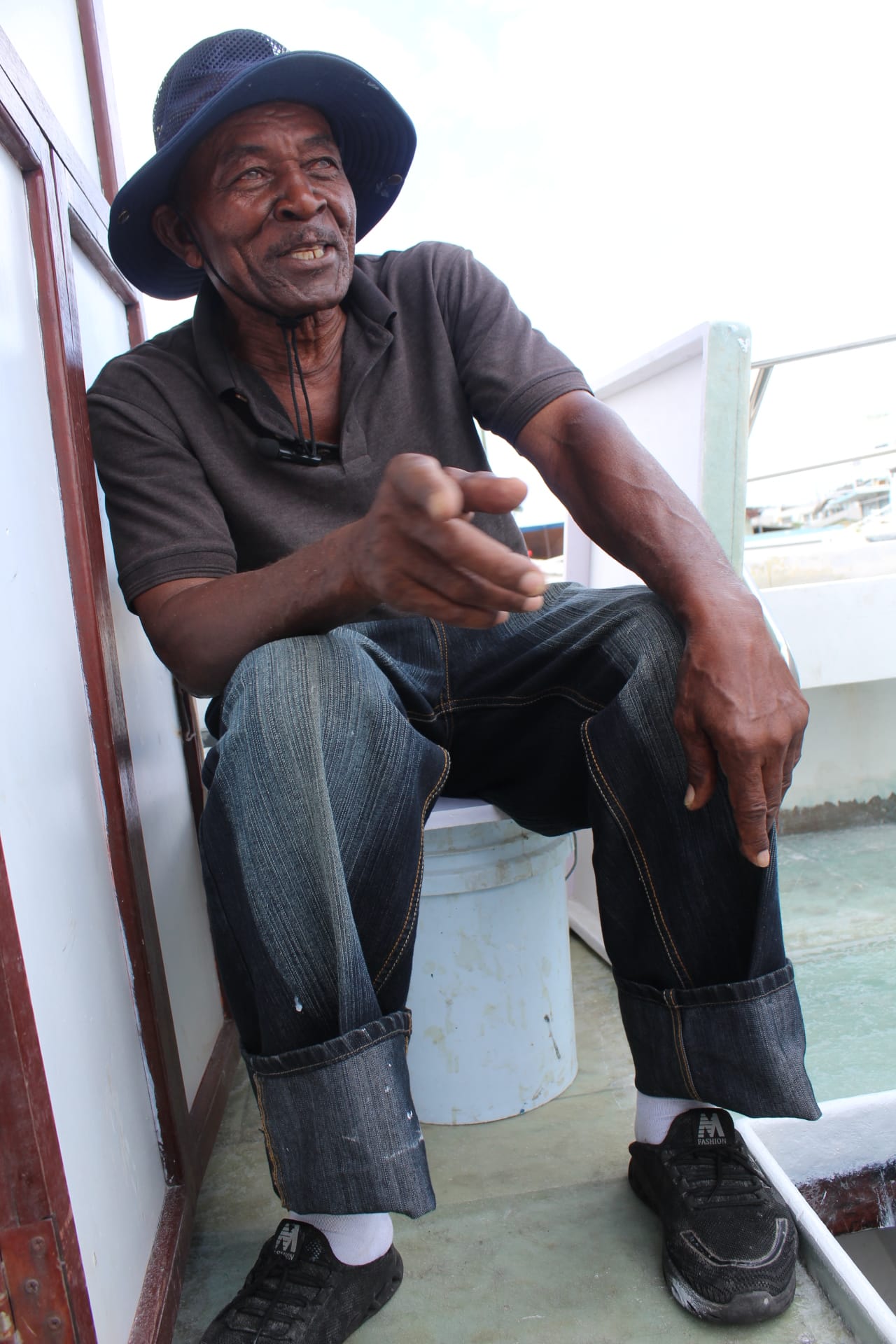
“The way I see the fish, you know, like swimming. It is, it became, you know, real attractive seeing the way how they bite, how you hook them and whatnot, and then with the nets and how you catch the flying fish...,” he sits forward on his bucket perch on the deck of the Lady Muriel II. This is his replacement vessel which he’s still in the process of building. And his projected return to the seas is in parts thanks to the Beryl Emergency Response and Recovery Project (BERRP), also called the Beryl Barbados Project, Vessel Replacement Programme.
The Programme is a funding facility comprising loan plus grant or conditional grant components with funds allocated through a loan by the World Bank to the Government of Barbados. The purpose of the facility is to assist some of the more than 200 boats damaged during Hurricane Beryl in 2024 to return to fishing.
The Beryl Barbados Project launched just over a year ago, designed and launched the Vessel Replacement Programme officially in mid-August 2026 although applications to the fishing community opened months before. It was one of the initiatives aimed at recovery and building resilience post-Beryl.
Harvey, the go-getter that he is, was in fact one of the first 10 recipients of the funding, and he’ll tell you that he was the first boat owner through the doors of the fiduciary agency, Enterprise Growth Fund Limited (EGFL), when the applications started. Another near 20 applications are currently going through approvals processes as of mid-August.
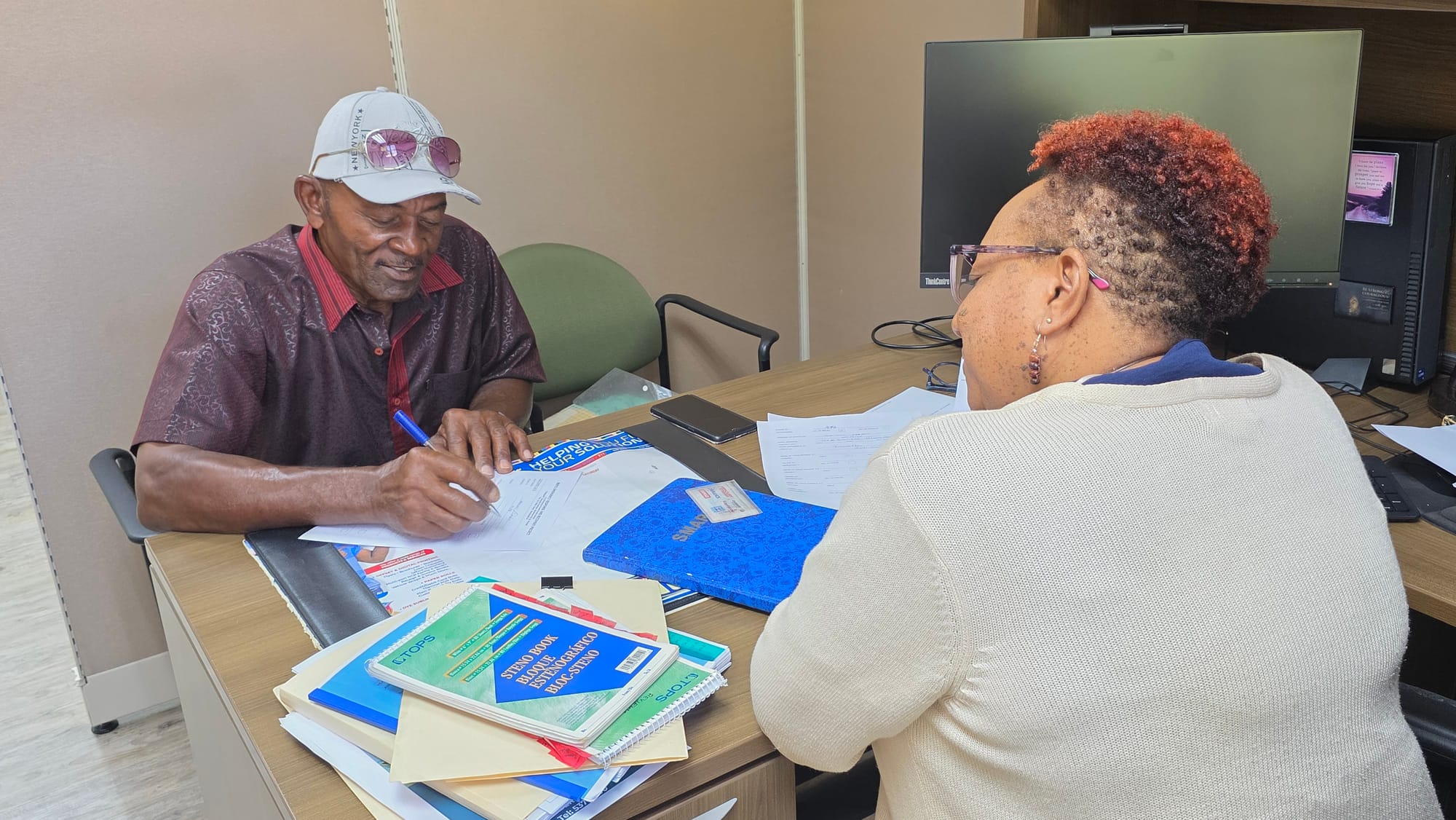
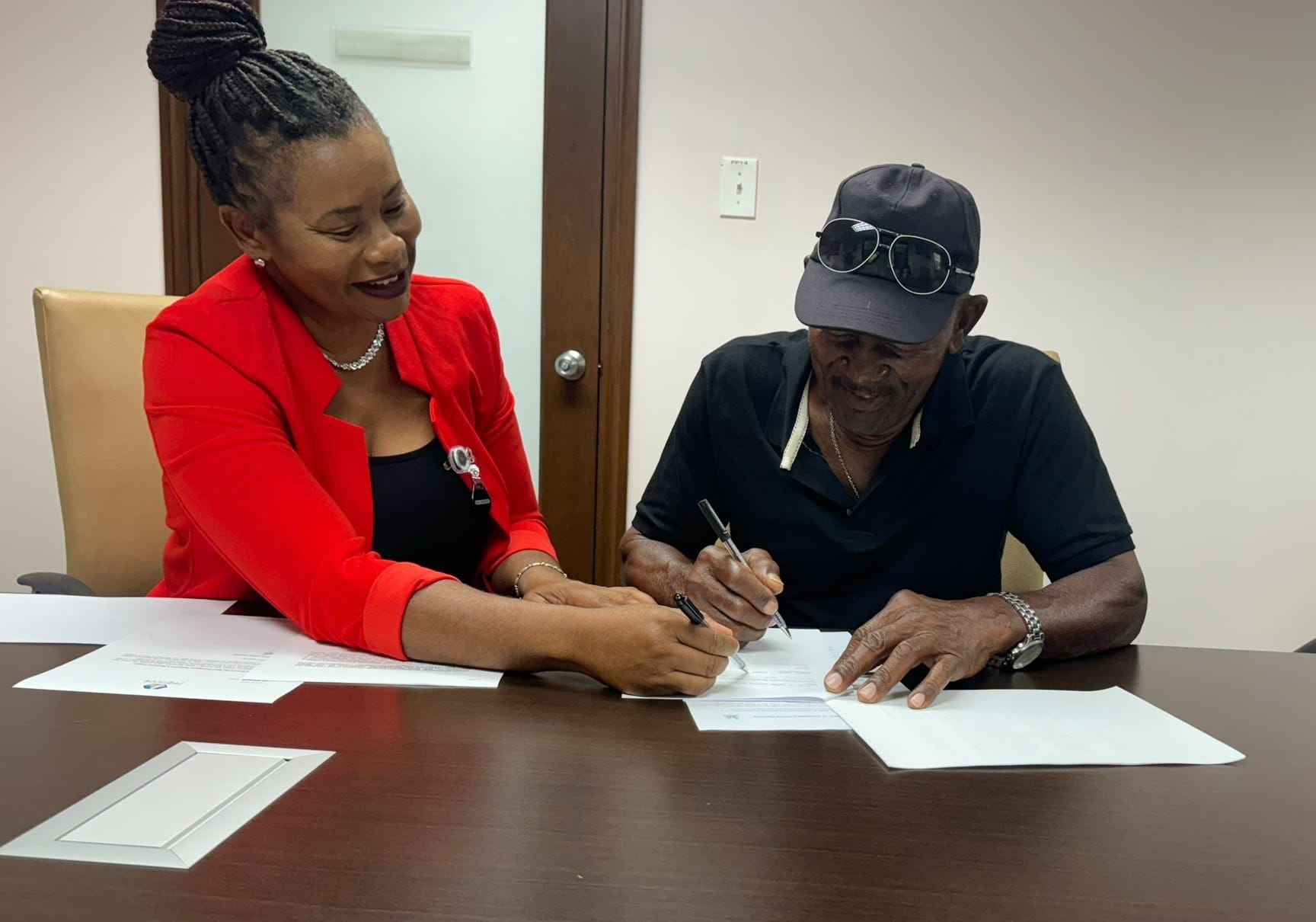
Harvey going through the application process back in January 2026 to apply for his grant (at left), and in June signing off the final paperwork (at right).
The process, Harvey says, was mostly seamless thanks to the information provided by the Beryl Barbados Project in two workshops pre-opening of applications, as well as directly from the agents at EGFL. It helped that he already had most of his paperwork together when he went through the doors. His focus was simply getting his boat, which he began constructing just months after the hurricane, back out to sea.
Harvey’s previous boat, the Lady Muriel, now stands in the shadow of the Lady Muriel II, stacked on barrels with the frame supported by large stones. Even with the bow torn off and wood splintered to the extent that one can see straight into the chaos that lies in the belly of her, Lady Muriel is still somehow majestic – wounded, but prideful. Perhaps it’s the tone in Harvey’s voice that conveys this image, emoting both the reverence and love he still has for her, which is present in every glance he gives her in reminiscence. After all, she was the vessel he first fished from when he fell in love with the profession.
“That was a beauty. It is definitely a beauty. It was 37 feet long. And as you see, two feet is broken off the bow,” he gazes across with warmth at the boat now covered with torn pieces of material that barely conceals the damage. “It’s 35 there now. Two feet get break off, but the boat was still floating,” he recalls of the hours post-Hurricane Beryl.
“The sea was breaking over the keys and coming into that boat. And it just coming down through the holes, 'cause I always got my boat clean and clear all the time…,” he says, explaining that the systems built into the boat worked so well that it always immediately pumped out any water that got on board.
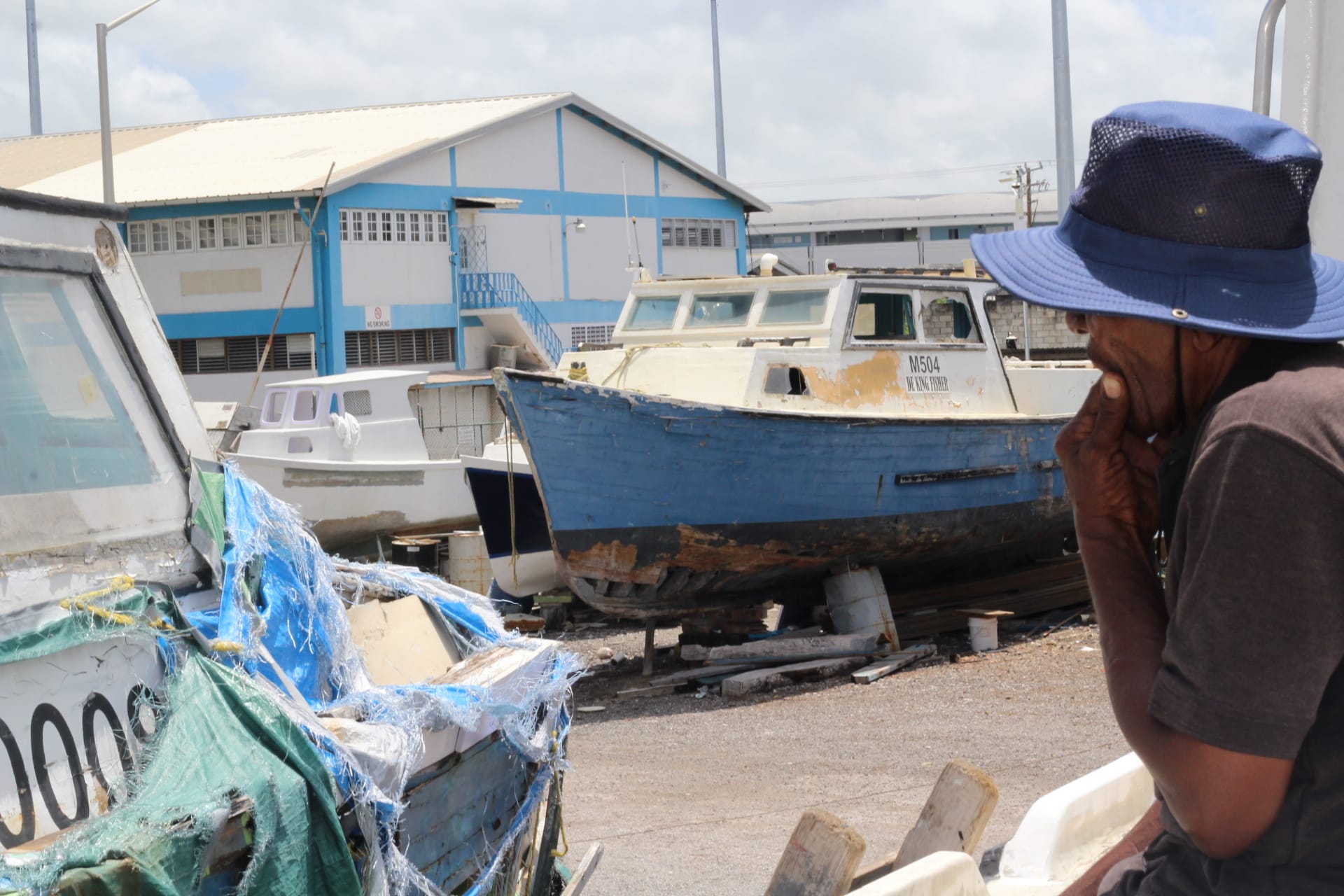
Hurricane Beryl, however, was a different matter. Most of the damage came from the motion of the boat relative to the damaging waves and nearby walls. But Lady Muriel still did not sink, he says as if still amazed at his “miracle boat” as he calls her. “It was very well built, but I don’t care how hard it is, you can’t stand up to beating like that, slamming every wall.”
Like dozens of fishermen at the time, he had ice, water, tackle, diesel and much more on board when he was ‘grounded’ by warnings of the system. He then prepared to head for his usual mooring, but the Bridgetown marina filled up fast.
“I very normally have a tie in the south side. All Oistins boats, I tell you, were down there… So I had to go tie right up to the mouth, almost to the mouth of the complex. And I had four big ropes on [Lady Muriel]. [Hurricane Beryl] burst all four, but none of us that was in that line went bottom … All our boats parked there, but none of them ain’t sink.”
Some of the Canadian built boats in that same line at the mouth of the marina survived he recalls because they were sturdy and fiberglass. His Lady Muriel, however, was wooden and could not stand up to the battering and splintering. The engine survived though and he is now able to transfer that into the Lady Muriel II.
But the Lady Muriel was too badly wrecked. To bring it to any kind of sailing state, Harvey says, would have started him somewhere in the range $300,000, “’Cause I gotta start from the keel and I gotta pick down all that [wood] and start fresh again... So you're paying to pick down, then paying to put back up, and then buying material fresh, that’s three sets of money. It makes no sense.”
He can laugh now as he recalls he told someone recently “I can’t remember the seas”, because after the heartbreak of losing Lady Muriel came months of survival. Harvey was probably in a better position than most, because his previous career allowed him to save, and that money he pumped into his living expenses, to some extent, and to finding Lady Muriel’s replacement. He found a local boat owner who was retiring and made an offer on the shell, which still needed work. Then he started pumping thousands into getting back up and going while waiting on the promised assistance from the Beryl Barbados Project detailed during various engagements with the local fisherfolk community.
“Never worked a day different [except] for myself ... All my savings … I spent $128,000 on this boat, and it ain't quite finished. But most of the stuff that I used, that I really needed I got.” What remains are some of the electrical and mechanical parts that will automate the critical operations of the vessel, some of which needed to be bought and/or customised abroad.
Because of how much he was able to do himself and through hiring a local boat builder, Harvey was able to qualify for the conditional grant of the Vessel Replacement Programme. The conditional grants operate on the premise that the boat owner can replace 75 per cent of the cost of the vessel, with the project providing the grant to complete the remaining 25 per cent. This is the money that will help him do what’s left.
So, as a man who’s not afraid to learn, Harvey dedicated his days to the small, non-technical work on his boat, which included teaching himself fiberglass application based on observing other builders. He anticipates being back in the waters by November 2026. By then he would have completed his remaining resin work, had his electronics installed, completed the sanding, painting, insulation and the sealing work that will be necessary, and of course, his living quarters.
He jokes as he takes up his custom-built chair from which he will be steering his boat. It’s built to hold firmly to the cockpit floor. “When Shelly came down here and saw this, we laugh, cause I tell she she need to come with me for a sail. Now we can’t do that,” he says with fond memory of the former Chief Fisheries Officer, Dr. Shelly-Ann Cox.
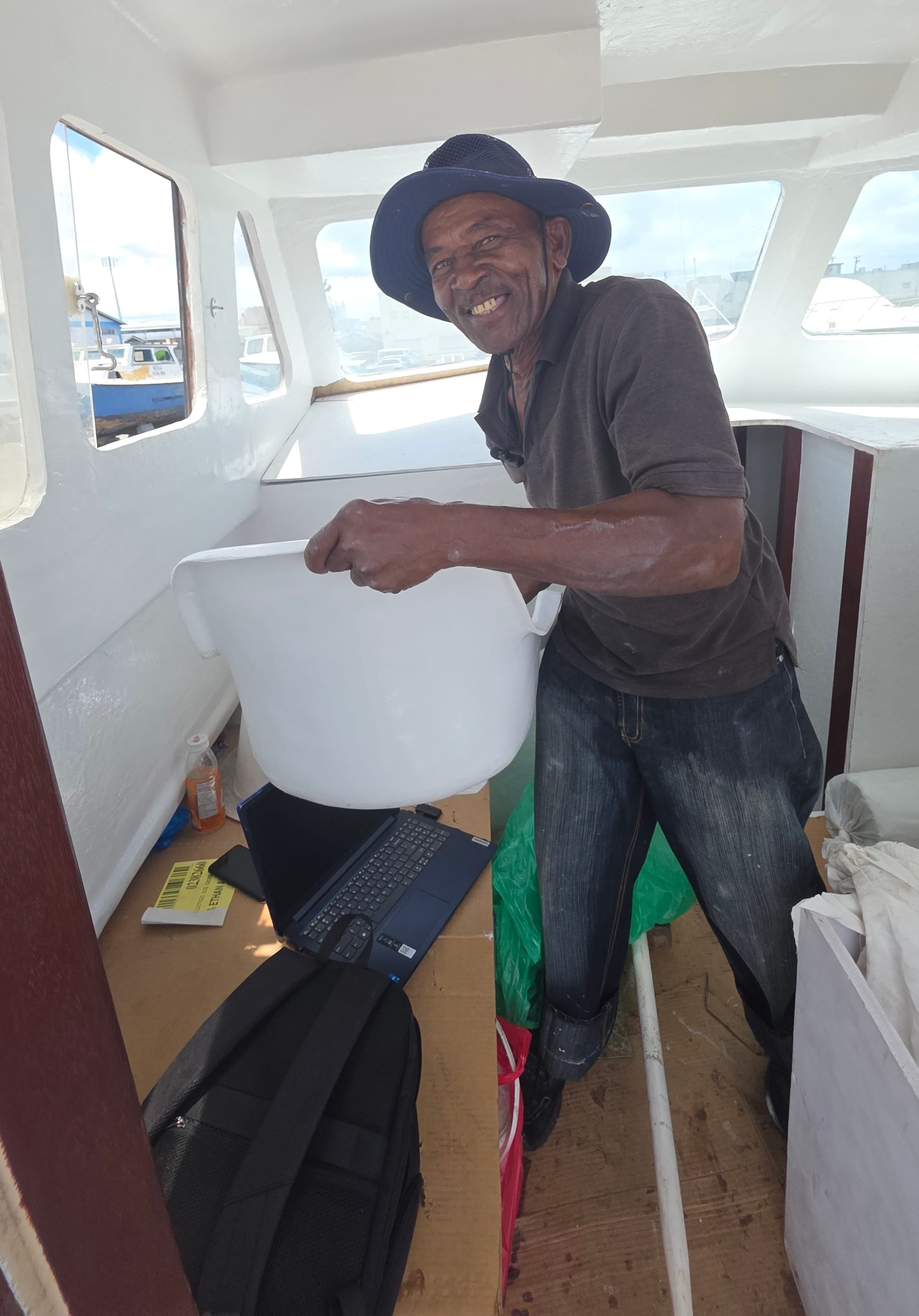
He reminisces for a bit about how much she encouraged him not to give up on his dream of getting back in the waters sooner, especially now that it’s just him alone, having lost his only daughter some years ago. He notes his improvements for hygiene on board bring back even more memories of Dr. Cox, as she always praised his vessel’s clean and organised condition, whether moored or at sea.
While he’ll share one-on-one about what he’d like to see happen in the industry regarding concessions, insurance and improving boats on a whole, he’s not the most vocal in crowded forums. But he gets serious now about the fact that fishing is not a hobby but a business and he treats it as such, making sure everything from his materials to his shipmates are of the best quality. And it shows as Lady Muriel II takes shape and he guides a tour around her, pointing out his ideas for paint scheme, lighting, and safety. His energy is infectious and it’s clear that the one thing on his mind is hitting the open seas and casting his nets once again.