

Reposted from GIS' Website
Twenty-two persons have successfully completed the Fishing Vessel Operations Level Three Course, marking a significant step toward strengthening Barbados’ maritime sector and improving safety at sea.
The graduates, who are fishermen, members of the Barbados Coast Guard, and Fisheries Division staff were recognised during a closing ceremony today, at the Barbados Coast Guard headquarters, along the Mighty Grynner Highway.
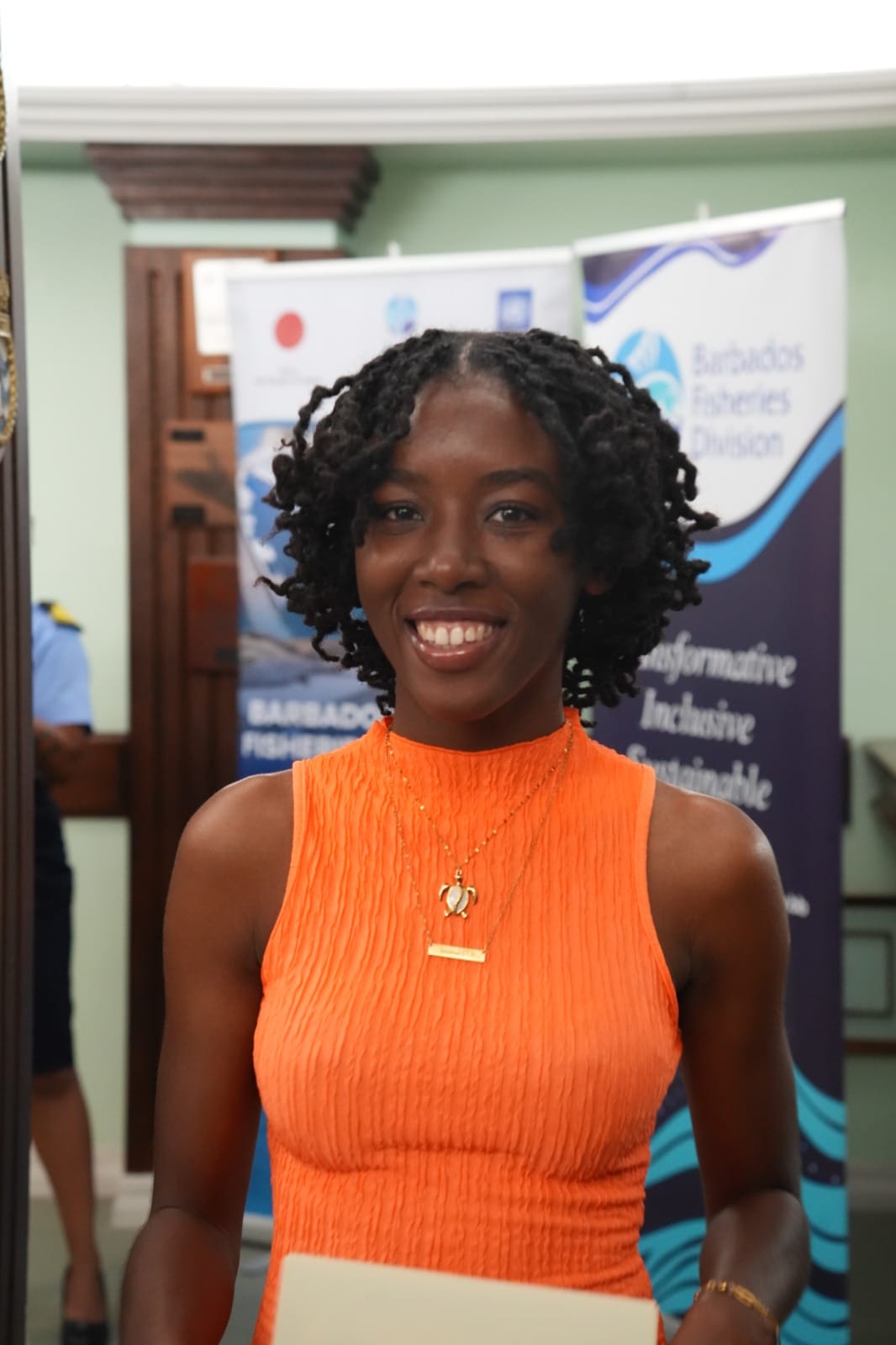
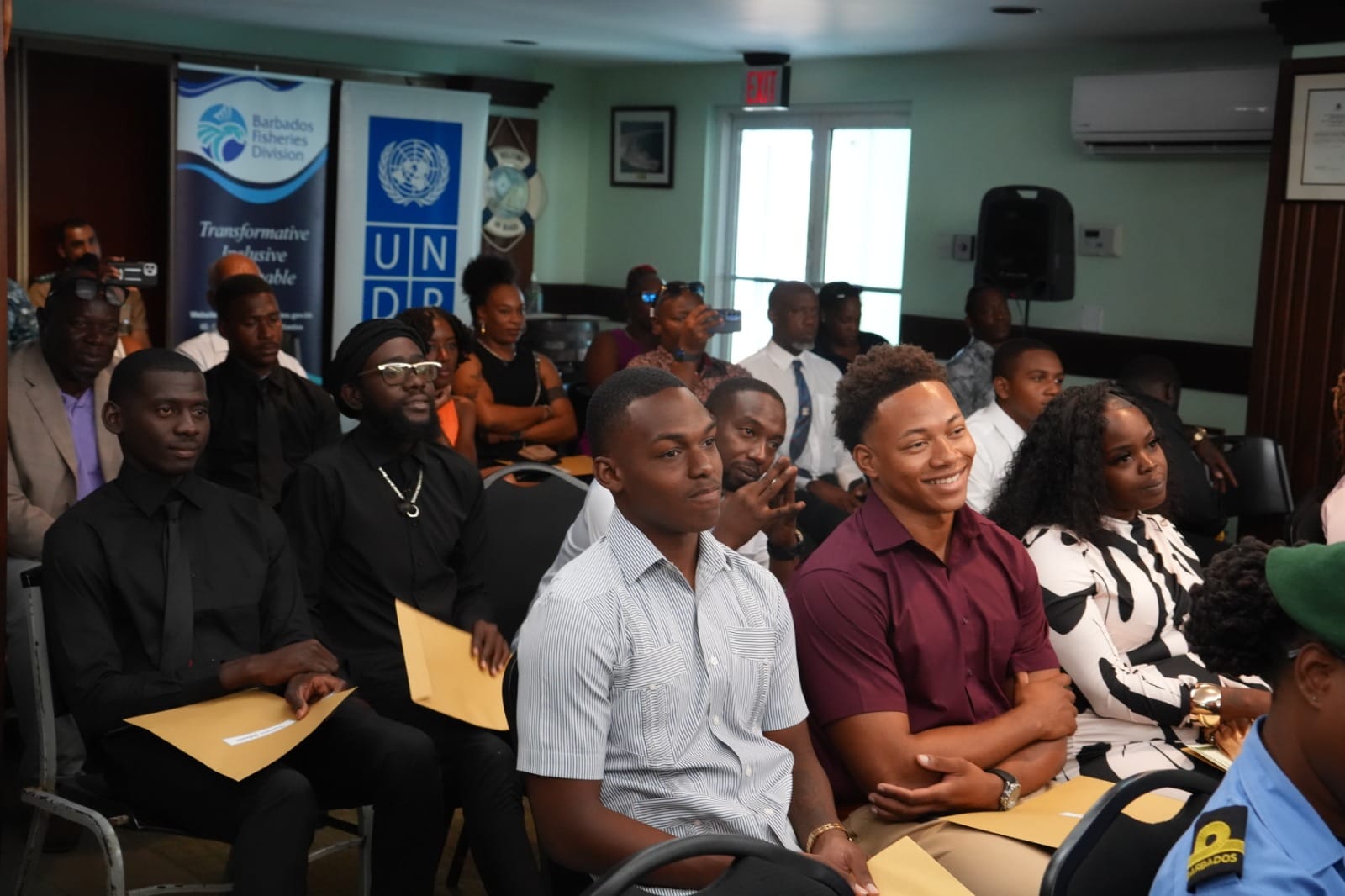
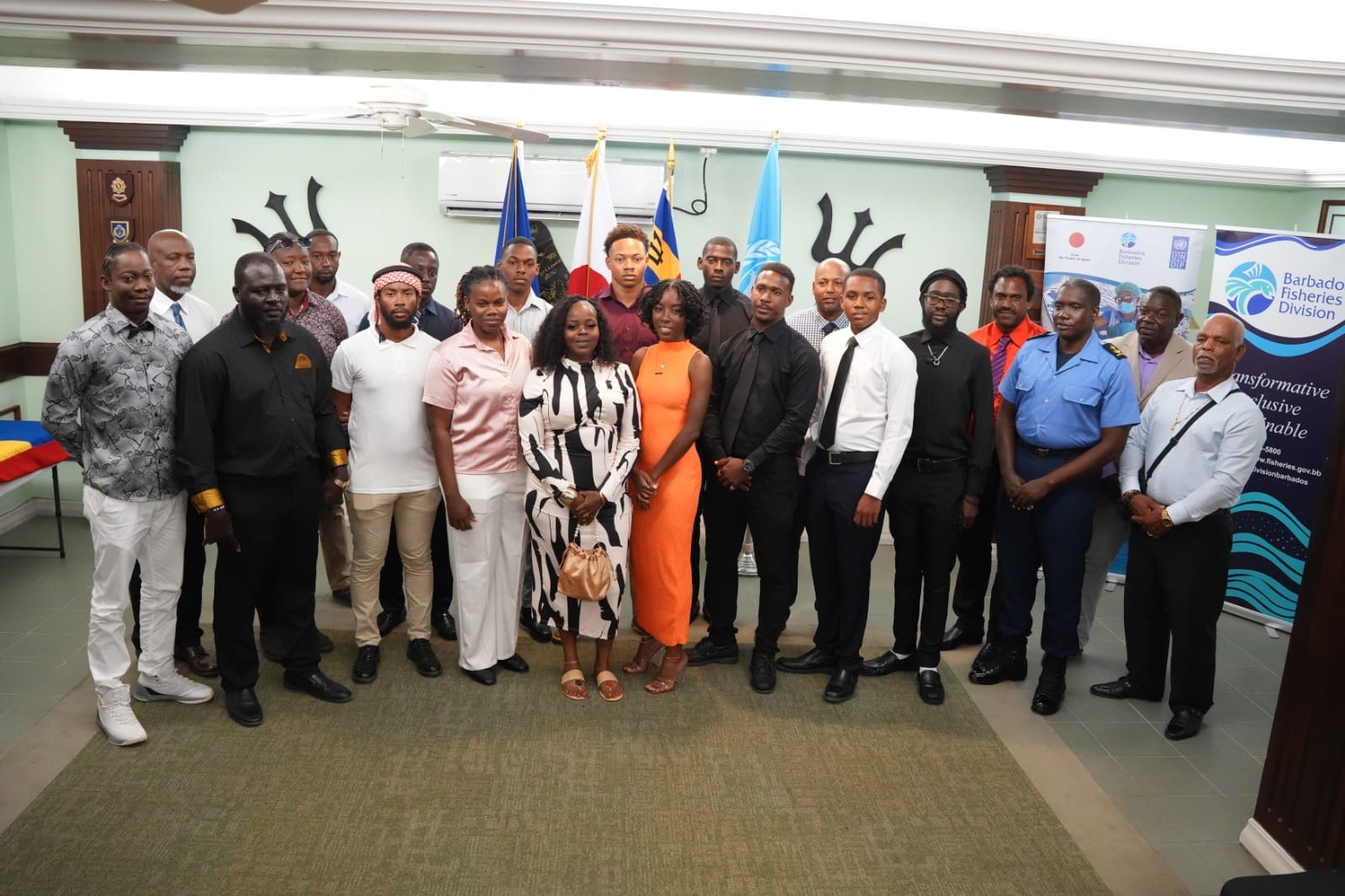
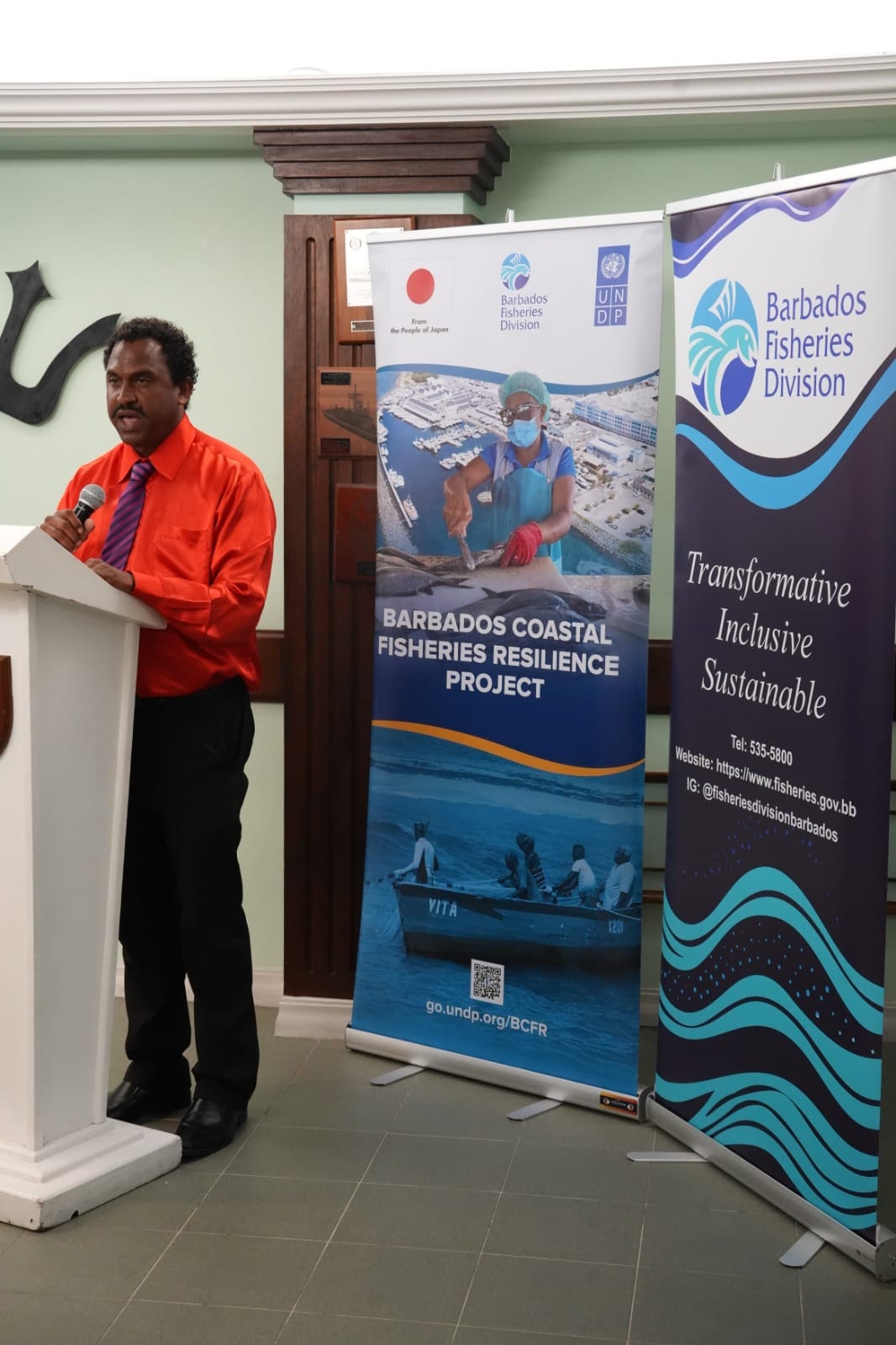
Snapshots from the Closing Ceremony held on 27 March 2026 at the Barbados Coast Guard
Chief Fisheries Officer, Dr. Shelly-Ann Cox, described the programme as a critical investment in building capacity within the fisheries sector.
“This course is our strategy for training and building the capacity of fisheries stakeholders. It is very comprehensive and ensures that future captains are well equipped, particularly in navigation and maritime safety, which is extremely important,” she said.
Dr. Cox also highlighted the collaboration between the Fisheries Division, the Barbados Defence Force’s Coast Guard, and the Technical and Vocational Education and Training (TVET) Council, noting that the certification allows participants to operate not only locally, but across the Caribbean maritime industry.
She stressed the growing importance of strengthening skills within the sector, particularly in the face of climate change, while also emphasising the need for enhanced safety measures such as vessel monitoring systems and life-saving equipment.
The Chief Fisheries Officer also took a moment to recognise one of the programme’s top performers, Zhicai Su, who is currently lost at sea.
“Mr. Su was recognised as the most outstanding student. He went above and beyond, and we are hoping for his safe return,” she stated, adding that officials remain in contact with his family.
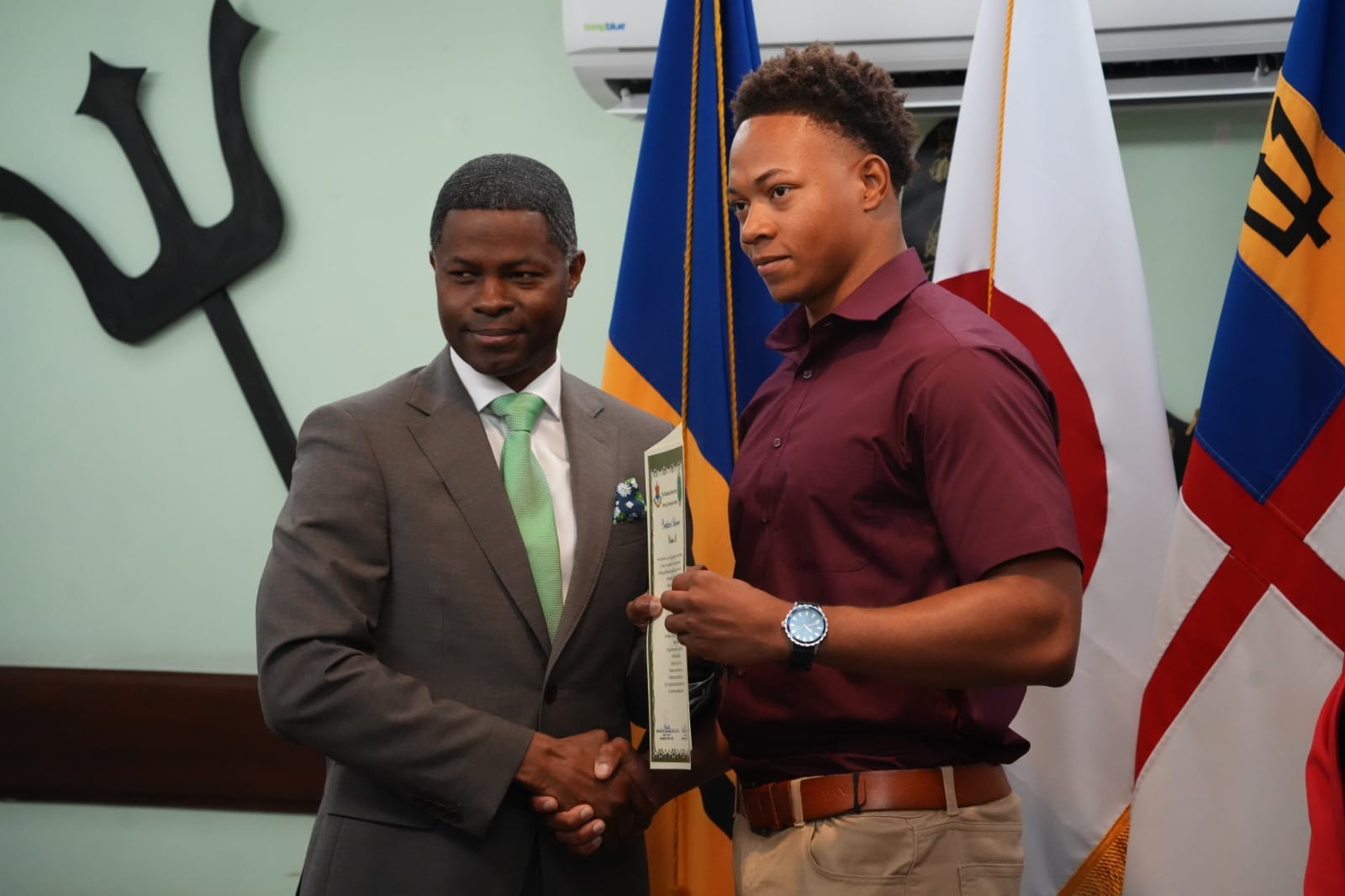
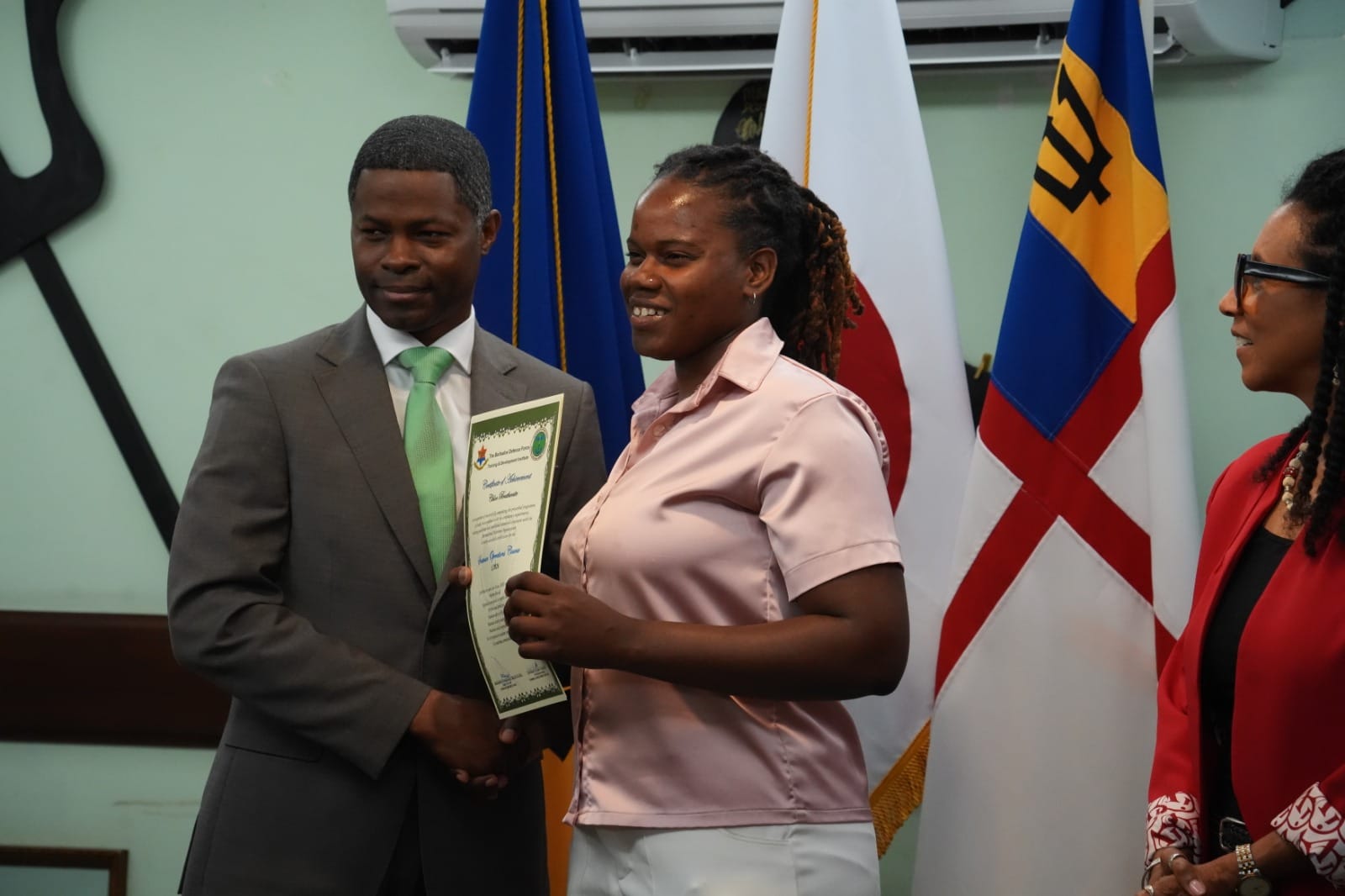
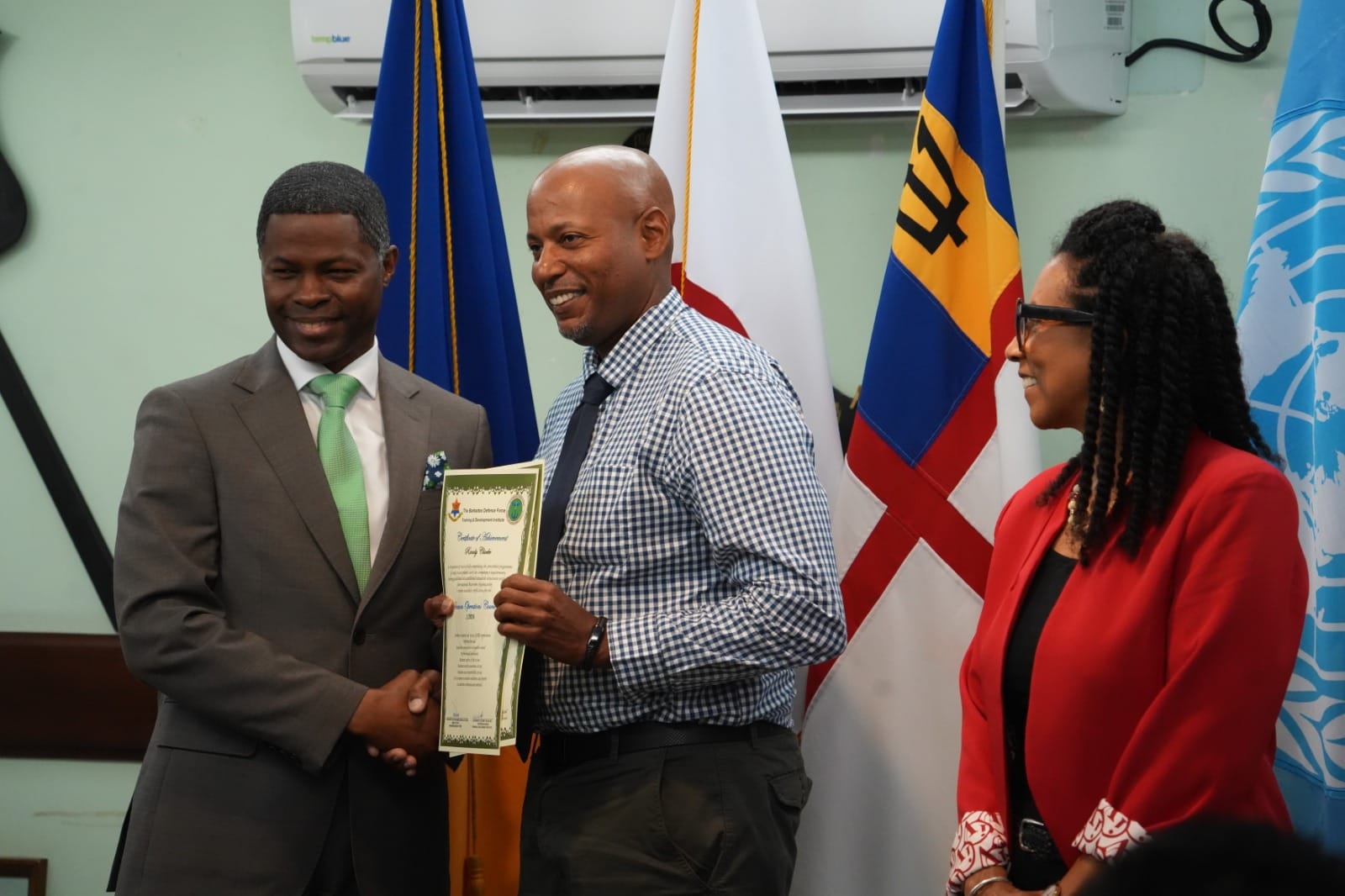
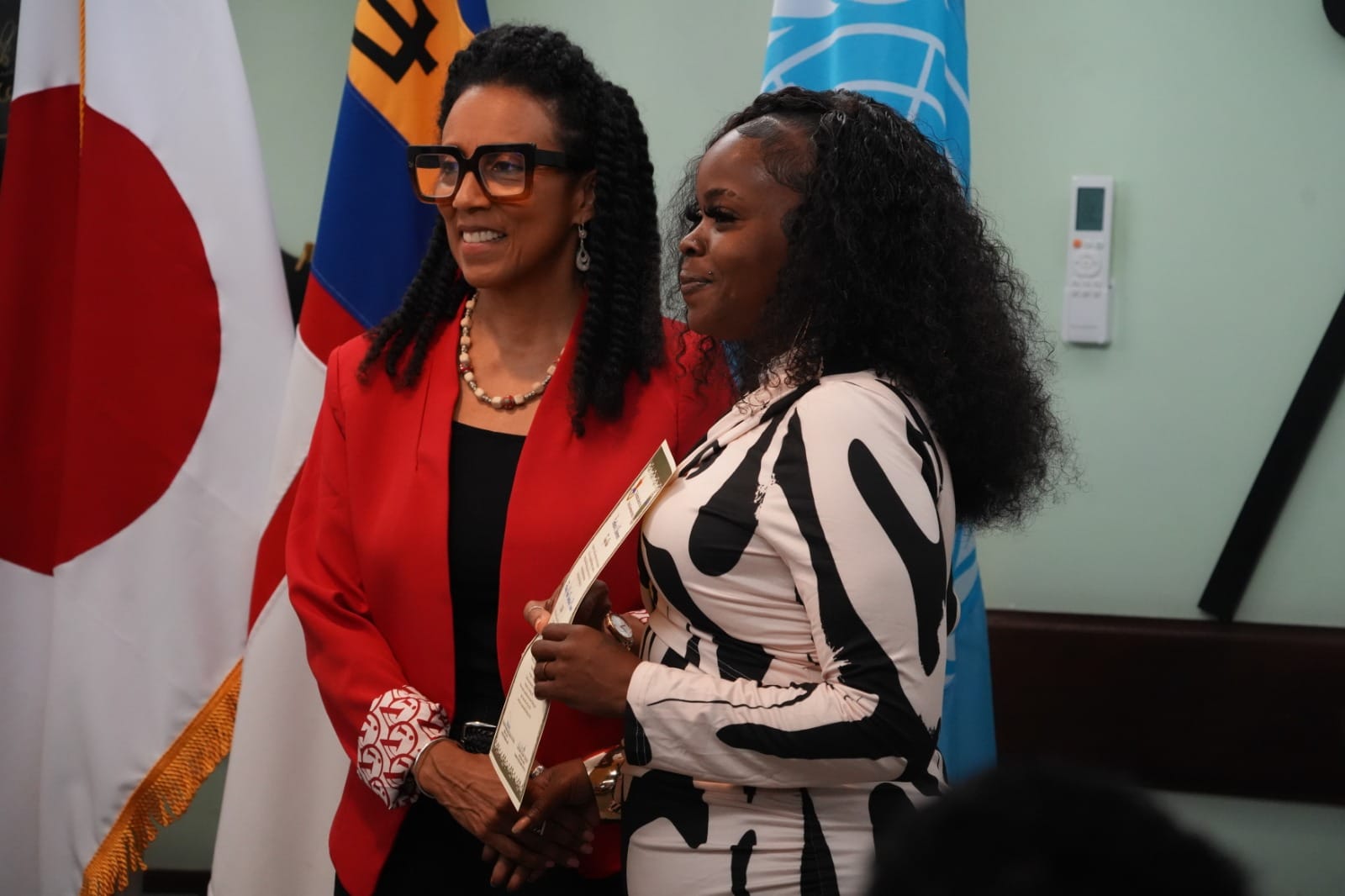
Chief of Staff Brigadier the Hon Carlos Lovell and Mrs. Elizabeth Charles-Soomer Cluster Lead at UNDP presenting the Certificates to successful participants.
Training Officer at the Barbados Coast Guard, Lieutenant Kirk Holder, explained that although the course was originally designed to run for 11 weeks, it was successfully condensed into eight weeks without compromising the quality of training.
“The participants still gained all the required knowledge to function in this capacity. Now it’s about getting hands-on experience and becoming more exposed to the fishing industry,” he noted.
Lieutenant Holder maintained that while certification is important, the true value of the programme lies in safety preparedness.
“It’s not only about certification… it’s about safety at sea. When you are out there, you have to depend on each other. The more knowledgeable you are, the better you can respond when situations become difficult,” he stressed.
Manager of Technical Services at the TVET Council, Dario Walcott, emphasised the importance of competency-based training in preparing participants for real-world challenges.
“Technical and vocational education is the bridge between potential and productivity. Competency-based education ensures that individuals are not just trained, but truly work-ready,” he stated.
Mr. Walcott noted that participants who successfully complete the programme earn a Level Three qualification, identifying them as technicians capable of operating independently and managing vessel operations.
“This qualification signals that you have the knowledge, technical skills, attitudes, and safety awareness required to lead a crew and operate unsupervised,” he added.
He also called for greater collaboration within the maritime sector to ensure training programmes remain aligned with industry needs. The course formed part of ongoing efforts to modernise the island’s fisheries sector, improve safety standards, and develop a more resilient and competitive blue economy.
Cover photo caption: Front row (left to right): President of the Barbados National Union of Fisherfolk Organisation, Vernel Nicholls; Chief Fisheries Officer, Dr. Shelly-Ann Cox; Brigadier The Honourable Carlos Lovell; Cluster Lead/Programme Analyst – Prevention, Recovery and Resilience, UNDP; and Manager of Technical Services at the TVET Council, Dario Walcott, pictured with graduates of the Fishing Vessel Operations Level Three Course. (A.Reid/BGIS)